Good news: it's raining again and the tanks are now over 50% full with more falls forecast for this weekend.
Bad news: combined with the lower temperatures and reduced sun intensity of winter, the persistent cloud has forced us to switch on the electric backup for our solar hot water system. It's been seven months since the electricity company saw that meter move.
Ah well.
Showing posts with label confessions. Show all posts
Showing posts with label confessions. Show all posts
Thursday, 29 May 2008

Tuesday, 23 October 2007
Have we sprung a leak!?
In the past couple of months I've allowed the time being readings of the water and electricity meters to stretch out to about once a fortnight. Our consumption of both has been fairly consistent so there didn't seem much point in religiously getting out there every morning.
My previous reading was on the 13th of October and the figures for the preceding 18 days were a little high but nothing extraordinary: 7.3kWh electricity and 347L of water per day.
This morning, ten days later, there's something amiss. Electricity use has dropped back a touch to 6.9kWh per day, but water has shot up to an incredible 507L per day! That's 1.6kL of excess consumption and I just can't imagine where we might have used so much water. Got me wondering about a leak.
The other factor is the new solar water heater: it has a valve which opens under conditions of excess heat/pressure and I'm wondering how much water is being lost that way. I'll go and stick a bucket beneath the outlet (which is a bit of a risk, actually... bucket of really hot water just sitting there...) and try to get a feel for whether it's a significant amount.
Looks like I'll be reading the meters every day for a little while as I try to figure this out.
My previous reading was on the 13th of October and the figures for the preceding 18 days were a little high but nothing extraordinary: 7.3kWh electricity and 347L of water per day.
This morning, ten days later, there's something amiss. Electricity use has dropped back a touch to 6.9kWh per day, but water has shot up to an incredible 507L per day! That's 1.6kL of excess consumption and I just can't imagine where we might have used so much water. Got me wondering about a leak.
The other factor is the new solar water heater: it has a valve which opens under conditions of excess heat/pressure and I'm wondering how much water is being lost that way. I'll go and stick a bucket beneath the outlet (which is a bit of a risk, actually... bucket of really hot water just sitting there...) and try to get a feel for whether it's a significant amount.
Looks like I'll be reading the meters every day for a little while as I try to figure this out.
Sunday, 9 September 2007
My body goes green
(You're actually reading a post with a title like this? Ew... you're gross...)
Some time ago I made a non-core promise that for the sake of reducing my ecological footprint in terms of water and land use, methane production, oil consumption and waste generation I'd restrict the amount of Ice Break I consume to 375ml per day. Of course I have to call it a non-core promise now because I've utterly failed to keep it. But that's OK if you rename a broken commitment and call it an NCP.
Unfortunately for my vast network of Ice Break suppliers, my body appears to have a higher standard of ethics than that.
I have a heart condition which basically comes down to not being good at keeping a steady rhythm. Lately it's been getting worse. Much worse. And I noticed a pattern - it was worst on the days when I had consumed the most Ice Break. A little bit of experimenting seems to have confirmed that if I drink more than the allocated 375ml in a day I get bad arrhythmia.
In terms of values driving behavioural changes my addiction has so far proven stronger than the idea of preventing some cow farts and giving VISY a few less bottles to recycle. But if drinking less Ice Break is going to stop my heart from skipping like an epileptic wallaby while I'm trying to go to sleep at night then the country air's going to be just that little bit cleaner from now on.
Some time ago I made a non-core promise that for the sake of reducing my ecological footprint in terms of water and land use, methane production, oil consumption and waste generation I'd restrict the amount of Ice Break I consume to 375ml per day. Of course I have to call it a non-core promise now because I've utterly failed to keep it. But that's OK if you rename a broken commitment and call it an NCP.
Unfortunately for my vast network of Ice Break suppliers, my body appears to have a higher standard of ethics than that.
I have a heart condition which basically comes down to not being good at keeping a steady rhythm. Lately it's been getting worse. Much worse. And I noticed a pattern - it was worst on the days when I had consumed the most Ice Break. A little bit of experimenting seems to have confirmed that if I drink more than the allocated 375ml in a day I get bad arrhythmia.
In terms of values driving behavioural changes my addiction has so far proven stronger than the idea of preventing some cow farts and giving VISY a few less bottles to recycle. But if drinking less Ice Break is going to stop my heart from skipping like an epileptic wallaby while I'm trying to go to sleep at night then the country air's going to be just that little bit cleaner from now on.
Sunday, 26 August 2007
Mulch ado about nothing
If you've read a few of my previous posts you'd hopefully know that I'm strongly in favour of reducing the amount of manufactured goods we purchase, selecting locally-made quality items when it's necessary to buy something and using my own muscles in preference to power tools. But sometimes the practicality of the situation is that you really don't have much choice.
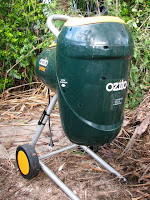 This weekend I bought a mulcher. It was made in China, which is generally considered to have some of the worst industrial practices in the world in terms of environmental impact and social justice. It came in a box with styrofoam, plastic bags and bubble-wrap. Large portions of the product itself are made of plastic which is probably not recyclable. Oh, and it can use as much electricity in about two and half hours as the rest of the house does in a whole day (not counting hot water).
So what was I thinking?
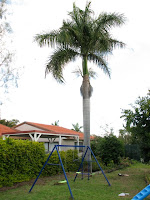 Well there's a lot growing in our back yard including a couple of monster palm trees which drop enormous fronds on a regular basis. We have hibiscus bushes and on three sides a border of sheena's gold, all of which need to be trimmed frequently or they get out of hand. In order to make room for tank #1 I had to remove (by hand) one small tree and while I was at it I removed another (by hand) which had established itself in what is ostensibly the vege garden. Both of the trees, a half dozen fronds and a heap of prunings all piled together were starting to look like a fabulous snake refuge for the coming summer.
In rural areas and in times past, people would simply burn much of this material either as fuel or simply to get rid of it. That's not permitted in cities like Brisbane (for good reason). Here, this material is considered "waste" and so it is subjected to the same general rule which applies for other waste - it gets transported to a central waste transfer station and "processed". If I don't want my garden trimmings rotting in landfill I have to put them in a trailer and drive more than 15 minutes each way to drop them off myself - or pay somebody else to make the trip for me.
But I don't see this material as waste. It's a resource which I want to use here as compost or mulch. I tried for a while stripping the green leaves from the hibiscus prunings by hand so as to make a suitable material for compost, but in the end it just wasn't working. And how am I supposed to manually make mulch from those huge palm fronds?
In a bygone era there might have been mulching machines which could be powered by hand (or foot, or horse... or children). I very much doubt I could track one of those down these days. In the end there wasn't much choice. I had to go with what's available.
One aspect of the decision was easy: I wanted an electric one rather than something with a petrol engine, because I know I can buy 100% of my electricity from renewable, non-polluting sources. Beyond that it was just a question of choosing something that would get the job done. And I have to say... well actually no, I won't "say" anything. I'll just let the results speak for themselves.
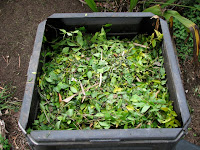
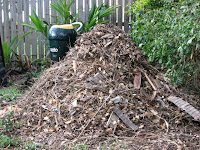
 This weekend I bought a mulcher. It was made in China, which is generally considered to have some of the worst industrial practices in the world in terms of environmental impact and social justice. It came in a box with styrofoam, plastic bags and bubble-wrap. Large portions of the product itself are made of plastic which is probably not recyclable. Oh, and it can use as much electricity in about two and half hours as the rest of the house does in a whole day (not counting hot water).
So what was I thinking?
 Well there's a lot growing in our back yard including a couple of monster palm trees which drop enormous fronds on a regular basis. We have hibiscus bushes and on three sides a border of sheena's gold, all of which need to be trimmed frequently or they get out of hand. In order to make room for tank #1 I had to remove (by hand) one small tree and while I was at it I removed another (by hand) which had established itself in what is ostensibly the vege garden. Both of the trees, a half dozen fronds and a heap of prunings all piled together were starting to look like a fabulous snake refuge for the coming summer.
In rural areas and in times past, people would simply burn much of this material either as fuel or simply to get rid of it. That's not permitted in cities like Brisbane (for good reason). Here, this material is considered "waste" and so it is subjected to the same general rule which applies for other waste - it gets transported to a central waste transfer station and "processed". If I don't want my garden trimmings rotting in landfill I have to put them in a trailer and drive more than 15 minutes each way to drop them off myself - or pay somebody else to make the trip for me.
But I don't see this material as waste. It's a resource which I want to use here as compost or mulch. I tried for a while stripping the green leaves from the hibiscus prunings by hand so as to make a suitable material for compost, but in the end it just wasn't working. And how am I supposed to manually make mulch from those huge palm fronds?
In a bygone era there might have been mulching machines which could be powered by hand (or foot, or horse... or children). I very much doubt I could track one of those down these days. In the end there wasn't much choice. I had to go with what's available.
One aspect of the decision was easy: I wanted an electric one rather than something with a petrol engine, because I know I can buy 100% of my electricity from renewable, non-polluting sources. Beyond that it was just a question of choosing something that would get the job done. And I have to say... well actually no, I won't "say" anything. I'll just let the results speak for themselves.


Thursday, 26 July 2007
Sunday, 15 July 2007
Composting tragedy: a cautionary tale
This is going to be a difficult post to write. It has the potential to be quite disturbing to some people - you probably wouldn't let your kids read this. But it contains an important lesson for anybody interested in composting as a waste reduction strategy.
I wrote yesterday about a couple of different options for suburban composting. I described briefly the open-bottomed black plastic bin which I've been using in my first foray into managed decomposition.
Prompted into effort through the act of blogging (as I tend to be), late this afternoon I set about tending to the pile: turning it, then adding some new material and a bit of water. It's probably not the "right" way to go about things but I'm new to this.
The easiest way to turn a pile that's in a bin like mine is to lift the bin off the top, put it down next to the pile and start putting the pile back into it so that what was on the top ends up on the bottom and vise versa. So far, my compost pile is a mixed bag in terms of original material and current condition. Some of it looks really rich and vital, some is dry or woody. Not surprisingly the earth right at the bottom tends to be dark, moist and rich-looking. Since I'm transferring the pile between the same two locations each time I turn it, I have a habit of digging the shovel in a bit and moving some of that rich soil/compost into the active bin.
Today, that underlying soil was a lot more alive than I'd reckoned on. My shovel's blade went straight into a nest full of young mice.
I had read about the risk of mice or rats being attracted to compost bins. Prior to today I'd not seen any here, but while I was turning the top parts of the pile over two or three had dashed out to safety. I'd felt disappointed but somewhat resigned, and suddenly the neighbour's cat's recent tendency to camp out in this corner of my yard made a lot of sense. With those few out of the way I hadn't for a moment considered there'd be more beneath the ground.
Startled by a nest of vermin, and with some awful injuries already inflicted, my immediate reaction was to end the matter as quickly as possible. I don't know whether it was the right thing to do, and I'm not going to use this post to try and argue it either way, but I hated doing it and have felt sickened by it ever since.
The point of posting about it is to remind you of the obvious: human "wastes" are a rodent's "dinner", and wherever you find people you will also find rats and mice. Recycling our kitchen refuse in a compost bin is a brilliant idea in terms of resource utilisation and efficiency but we're not the only ones interested in those nutrients.
Maybe one of those fancy compost bins I linked to in my earlier post is not such an extravagant idea after all.
I wrote yesterday about a couple of different options for suburban composting. I described briefly the open-bottomed black plastic bin which I've been using in my first foray into managed decomposition.
Prompted into effort through the act of blogging (as I tend to be), late this afternoon I set about tending to the pile: turning it, then adding some new material and a bit of water. It's probably not the "right" way to go about things but I'm new to this.
The easiest way to turn a pile that's in a bin like mine is to lift the bin off the top, put it down next to the pile and start putting the pile back into it so that what was on the top ends up on the bottom and vise versa. So far, my compost pile is a mixed bag in terms of original material and current condition. Some of it looks really rich and vital, some is dry or woody. Not surprisingly the earth right at the bottom tends to be dark, moist and rich-looking. Since I'm transferring the pile between the same two locations each time I turn it, I have a habit of digging the shovel in a bit and moving some of that rich soil/compost into the active bin.
Today, that underlying soil was a lot more alive than I'd reckoned on. My shovel's blade went straight into a nest full of young mice.
I had read about the risk of mice or rats being attracted to compost bins. Prior to today I'd not seen any here, but while I was turning the top parts of the pile over two or three had dashed out to safety. I'd felt disappointed but somewhat resigned, and suddenly the neighbour's cat's recent tendency to camp out in this corner of my yard made a lot of sense. With those few out of the way I hadn't for a moment considered there'd be more beneath the ground.
Startled by a nest of vermin, and with some awful injuries already inflicted, my immediate reaction was to end the matter as quickly as possible. I don't know whether it was the right thing to do, and I'm not going to use this post to try and argue it either way, but I hated doing it and have felt sickened by it ever since.
The point of posting about it is to remind you of the obvious: human "wastes" are a rodent's "dinner", and wherever you find people you will also find rats and mice. Recycling our kitchen refuse in a compost bin is a brilliant idea in terms of resource utilisation and efficiency but we're not the only ones interested in those nutrients.
Maybe one of those fancy compost bins I linked to in my earlier post is not such an extravagant idea after all.
Sunday, 8 July 2007
Springback
There's a phenomenon in metal working called "springback". It's something you are probably already familiar with but may never have really thought about. Briefly, it's what a piece of metal might do when you attempt to bend it into a new shape: it will resist the change and spring back partly or completely towards the shape it started in. A guy I used to know worked as a fitter and turner, and he described how part of the skill of his job was to work out how much you had to bend something past where you wanted it to end up, so that it would spring back to the desired position.
It seems to me that similar effect can be seen in human behaviour.
There's a clear imperative upon us all to change our patterns of consumption and resource use. I've blogged about my efforts to conserve energy and water, to reduce waste and to cut down on GHG emissions in various ways. But I'm finding that after the initial pressure is applied to try and re-shape my behaviour there's a clear tendency to spring back towards the old ways again.
It affects different aspects of my behaviour to different degrees. I haven't checked the meters for a while but I think we're doing OK on the energy front. Water consumption will be up a little because with colder weather and plenty of stress from work and our new baby I'm being less disciplined about shower times. My car is now around a thousand kilometres behind my lease target (which is good for the environment and bad for my finances). But when it comes to Ice Break consumption... I'm failing big time.
I'm about as good a psychologist as I am a gardener (which means not very) but all this makes me wonder about the best ways to achieve the changes that we believe are needed to make human life a sustainable and positive component of life on Earth. Changing our behaviour is not really the goal: the responsible use of resources and the elimination of "waste" is the goal. Our behaviour tends to conform to the pressures placed on it. The challenge then is to work out how to maintain the pressure on our behaviour.
It's stretching the analogy a bit, but if I wanted a piece of springy metal to conform to a particular shape one of my options would be to brace it somehow. To trap it in a framework which didn't permit it to spring back to the shape it's naturally inclined to take. What's the equivalent in terms of human behaviour?
Perhaps instead of focusing on my behaviour and trying to convince others to behave like me, I should be putting the effort into changing the frameworks that guide people's behaviour - including my own. Those frameworks include social and personal values, education, policy, law and technology.
----
Hmm... switching mode now from essay to free-thinking blog post as I ponder what I've just been writing.
It seems to me that the primary driver for personal behaviour must surely be personal values. If so, that would imply that my failure to change behaviour in personal matters (such as limiting my Ice Break consumption as I had committed to do) comes down to a question of my own values. That I value the experience of drinking coffee-flavoured milk more highly than the environmental benefits gained by reducing my consumption. And that would probably be because the benefits of drinking it are personal, immediate and known whereas the benefits of reducing consumption are dispersed, delayed and unknown.
I would guess that same comparison could be applied just about universally in regard to the ways we all choose to live our lives. To take it to the extreme, not many of us would voluntarily live a life of poverty and hard labour in order to better the lives of others. Those people who do live lives according to those kinds of principles tend to be venerated rather than emulated.
It all comes down to the question of why we do anything at all, I suppose. For me, at this point in time, the basic motivation is something along the lines of having the best life I can whilst simultaneously promoting the best lives possible for everybody else who lives now and who will live in the future. The attitude is more one of teamwork than of charity, but it's forever difficult to try and balance my quality of life with that of everybody else when both are essentially unquantifiable.
I seem to have settled on some core principles though, including one I mentioned earlier: "the responsible use of resources and the elimination of waste".
I'll leave it there for now. Something to ponder and possibly post about another time.
It seems to me that similar effect can be seen in human behaviour.
There's a clear imperative upon us all to change our patterns of consumption and resource use. I've blogged about my efforts to conserve energy and water, to reduce waste and to cut down on GHG emissions in various ways. But I'm finding that after the initial pressure is applied to try and re-shape my behaviour there's a clear tendency to spring back towards the old ways again.
It affects different aspects of my behaviour to different degrees. I haven't checked the meters for a while but I think we're doing OK on the energy front. Water consumption will be up a little because with colder weather and plenty of stress from work and our new baby I'm being less disciplined about shower times. My car is now around a thousand kilometres behind my lease target (which is good for the environment and bad for my finances). But when it comes to Ice Break consumption... I'm failing big time.
I'm about as good a psychologist as I am a gardener (which means not very) but all this makes me wonder about the best ways to achieve the changes that we believe are needed to make human life a sustainable and positive component of life on Earth. Changing our behaviour is not really the goal: the responsible use of resources and the elimination of "waste" is the goal. Our behaviour tends to conform to the pressures placed on it. The challenge then is to work out how to maintain the pressure on our behaviour.
It's stretching the analogy a bit, but if I wanted a piece of springy metal to conform to a particular shape one of my options would be to brace it somehow. To trap it in a framework which didn't permit it to spring back to the shape it's naturally inclined to take. What's the equivalent in terms of human behaviour?
Perhaps instead of focusing on my behaviour and trying to convince others to behave like me, I should be putting the effort into changing the frameworks that guide people's behaviour - including my own. Those frameworks include social and personal values, education, policy, law and technology.
----
Hmm... switching mode now from essay to free-thinking blog post as I ponder what I've just been writing.
It seems to me that the primary driver for personal behaviour must surely be personal values. If so, that would imply that my failure to change behaviour in personal matters (such as limiting my Ice Break consumption as I had committed to do) comes down to a question of my own values. That I value the experience of drinking coffee-flavoured milk more highly than the environmental benefits gained by reducing my consumption. And that would probably be because the benefits of drinking it are personal, immediate and known whereas the benefits of reducing consumption are dispersed, delayed and unknown.
I would guess that same comparison could be applied just about universally in regard to the ways we all choose to live our lives. To take it to the extreme, not many of us would voluntarily live a life of poverty and hard labour in order to better the lives of others. Those people who do live lives according to those kinds of principles tend to be venerated rather than emulated.
It all comes down to the question of why we do anything at all, I suppose. For me, at this point in time, the basic motivation is something along the lines of having the best life I can whilst simultaneously promoting the best lives possible for everybody else who lives now and who will live in the future. The attitude is more one of teamwork than of charity, but it's forever difficult to try and balance my quality of life with that of everybody else when both are essentially unquantifiable.
I seem to have settled on some core principles though, including one I mentioned earlier: "the responsible use of resources and the elimination of waste".
I'll leave it there for now. Something to ponder and possibly post about another time.
Thursday, 14 June 2007
Would you pay an extra $3 per litre for fuel?
A little while ago I wrote about my very nice but fuel-thirsty car and the arrangement I've entered into which obliges me to drive at least 25,000 km per year in it for another two years. My real issue with that is not so much the CO2 emissions (which can be offset to some degree) but that it's consuming an excessive amount of non-renewable fuel.
As I promised to do in that post I've been looking into my options for switching to something more efficient. The car which has caught my attention is a small four-door with a continuously variable automatic transmission (aka CVT) and fuel economy rated at a very impressive 5.6L/100km. And to my surprise there's actually more headroom in that tiny car than in the one I have now. At about $23,000 on the road I think it'd be a good choice.
But there's a problem with the financial side of things when it comes to the car I have now. The lease company wants thirty grand as a payout, and the car's worth only twenty as a trade-in: so if I want to do this it's going to cost me ten thousand bucks.
What will $10K get me? Well, over the next two years it'll drop my fuel consumption by about three thousand litres, assuming I were to continue to drive the same distance. Divide the one by the other and you get $3.33 per litre as the amount I'd be paying for the sake of using less fuel. (That's ON TOP of the actual cost of fuel at the pump!)
Of course the new car would cost less to purchase and run, so there'd be some compensation along the way. I haven't done the sums yet to work that one out, but I can imagine it still being in the vicinity of $3/litre.
I'm not sure I'm willing - or able - to do that. And besides, there's still the issue of what happens with the old car. A huge amount of energy was consumed making the thing, and it still performs its intended function perfectly well. It probably wouldn't be helping the overall cause to prematurely dispose of it.
So I guess there are three things I can do for the next couple of years to minimise the overall impact of my use of the car I have now:
As I promised to do in that post I've been looking into my options for switching to something more efficient. The car which has caught my attention is a small four-door with a continuously variable automatic transmission (aka CVT) and fuel economy rated at a very impressive 5.6L/100km. And to my surprise there's actually more headroom in that tiny car than in the one I have now. At about $23,000 on the road I think it'd be a good choice.
But there's a problem with the financial side of things when it comes to the car I have now. The lease company wants thirty grand as a payout, and the car's worth only twenty as a trade-in: so if I want to do this it's going to cost me ten thousand bucks.
What will $10K get me? Well, over the next two years it'll drop my fuel consumption by about three thousand litres, assuming I were to continue to drive the same distance. Divide the one by the other and you get $3.33 per litre as the amount I'd be paying for the sake of using less fuel. (That's ON TOP of the actual cost of fuel at the pump!)
Of course the new car would cost less to purchase and run, so there'd be some compensation along the way. I haven't done the sums yet to work that one out, but I can imagine it still being in the vicinity of $3/litre.
I'm not sure I'm willing - or able - to do that. And besides, there's still the issue of what happens with the old car. A huge amount of energy was consumed making the thing, and it still performs its intended function perfectly well. It probably wouldn't be helping the overall cause to prematurely dispose of it.
So I guess there are three things I can do for the next couple of years to minimise the overall impact of my use of the car I have now:
- Drive as efficiently as I possibly can.
- Purchase CO2 credits to offset the car's emissions.
- Consider whether it's worth paying the tax penalties for not driving 25,000km a year.
Saturday, 9 June 2007
Having a lapse
The reduced frequency of blog posting is probably an easy giveaway. I'm "backsliding", to borrow a term from the Christian tradition.
Showers are getting slightly longer. Meters are being read maybe twice a week. Takeaway food has become more common. The little car's fuel economy is well over 10L/100km and the big car's pushing 12. Ice Break consumption has increased again.
I have two ideas about why this may be happening.
First, I'm a perfectionist. I get terribly frustrated if things can't be "right" and I tend to avoid or ignore such things. I'm feeling overwhelmed by the enormity of the challenge of transforming the modern world into a sustainable society -- just try to avoid producing any kind of plastic waste for a whole day and you'll get a feel for how big a job we have ahead of us -- and my personal efforts feel about as effective as an amoeba trying to stop a bulldozer.
And that leads into the second idea. In my work I tend to get de-motivated if I'm always going it alone - I always get more done when working as part of a team. In the context of this sustainability thing I haven't yet found anybody local to "team up" with and that's making it hard to sustain my own momentum.
Showers are getting slightly longer. Meters are being read maybe twice a week. Takeaway food has become more common. The little car's fuel economy is well over 10L/100km and the big car's pushing 12. Ice Break consumption has increased again.
I have two ideas about why this may be happening.
First, I'm a perfectionist. I get terribly frustrated if things can't be "right" and I tend to avoid or ignore such things. I'm feeling overwhelmed by the enormity of the challenge of transforming the modern world into a sustainable society -- just try to avoid producing any kind of plastic waste for a whole day and you'll get a feel for how big a job we have ahead of us -- and my personal efforts feel about as effective as an amoeba trying to stop a bulldozer.
And that leads into the second idea. In my work I tend to get de-motivated if I'm always going it alone - I always get more done when working as part of a team. In the context of this sustainability thing I haven't yet found anybody local to "team up" with and that's making it hard to sustain my own momentum.
Friday, 25 May 2007
Down days
I had been wondering what would happen when my initial burst of enthusiasm for sustainability inevitably lost a little of the excitement that comes from starting a new project. Well now I know.
Have had a couple of down days. Haven't read my meters (though I'm still watching the Centameter and aggressively turning things off), have slacked off with the composting, have been using the car a little more than is really necessary, have been indulging in slightly longer showers... and haven't posted anything here.
There are a few things which I can think of which might have contributed to the slump. The biggest one is probably just the feeling of being overwhelmed: the challenges are so huge and I feel so impotent when literally everywhere I turn and in just about everything I do I see our utter dependence on crude oil.
I also come across analysis and predictions from various sources which make it sound like another dark age for humanity is all but inevitable. It's hard to maintain focus and discipline when somebody's telling you it's probably all for nothing.
What I want to hear from people - backed up by reasonable logic and solid data - is that there is a chance to maintain some of what I consider the best and most noble parts of our modern world. Coal and oil have provided the fuel for advances in so many areas: obvious ones like science and technology as well as indirect ones like allowing more time in billions of lives for education, art and social development.
As I look towards 2050 I want to be assured that the vast wealth of knowledge that is a defining characteristic of the current era will be available to all the way it is today - through the continued evolution of the Internet. I want to believe that we can apply our knowledge of natural sciences (with a healthy dose of wisdom from our forebears) to turn our backyards into thriving food gardens without sacrificing the opportunity for education, art and social development of each person. I want to know that my children will have access to at least the same level of health care that has literally saved my life several times over in the past 30 years.
So, after a couple of days of doing nothing terribly worthwhile, I'm going to try and pull myself together tomorrow. Meter readings, composting, disciplined consumption and working for the future... with a good bit of time set aside for fun with the kids, talking with Michelle, reading a book, listening to some music or chatting with the neighbours.
After all, there's not much point worrying about 2050 if I can't enjoy any of the days between now and then.
Have had a couple of down days. Haven't read my meters (though I'm still watching the Centameter and aggressively turning things off), have slacked off with the composting, have been using the car a little more than is really necessary, have been indulging in slightly longer showers... and haven't posted anything here.
There are a few things which I can think of which might have contributed to the slump. The biggest one is probably just the feeling of being overwhelmed: the challenges are so huge and I feel so impotent when literally everywhere I turn and in just about everything I do I see our utter dependence on crude oil.
I also come across analysis and predictions from various sources which make it sound like another dark age for humanity is all but inevitable. It's hard to maintain focus and discipline when somebody's telling you it's probably all for nothing.
What I want to hear from people - backed up by reasonable logic and solid data - is that there is a chance to maintain some of what I consider the best and most noble parts of our modern world. Coal and oil have provided the fuel for advances in so many areas: obvious ones like science and technology as well as indirect ones like allowing more time in billions of lives for education, art and social development.
As I look towards 2050 I want to be assured that the vast wealth of knowledge that is a defining characteristic of the current era will be available to all the way it is today - through the continued evolution of the Internet. I want to believe that we can apply our knowledge of natural sciences (with a healthy dose of wisdom from our forebears) to turn our backyards into thriving food gardens without sacrificing the opportunity for education, art and social development of each person. I want to know that my children will have access to at least the same level of health care that has literally saved my life several times over in the past 30 years.
So, after a couple of days of doing nothing terribly worthwhile, I'm going to try and pull myself together tomorrow. Meter readings, composting, disciplined consumption and working for the future... with a good bit of time set aside for fun with the kids, talking with Michelle, reading a book, listening to some music or chatting with the neighbours.
After all, there's not much point worrying about 2050 if I can't enjoy any of the days between now and then.
Tuesday, 15 May 2007
Time for a Break
(To anybody who thinks I'm going to slow down on the blogging - ha! No way, check out the length of this post!)
You know about my long hot showers. You know about my three-thousand-litres-of-fuel-a-year car. And now it's time for me to 'fess up to another unsustainable aspect of my life...
"My name is Terry, and I'm an Ice Break-oholic."
My Ice Break addiction started in about 1995. Michelle was living adjacent to a cluster of small shops which included a Brumby's bakery and a Night Owl convenience store. We'd long known about the delights of fresh Brumby's blueberry muffins with a coffee as breakfast on a clear Brisbane morning. But this fateful day I was in the mood for a coffee-flavoured milk drink instead of a hot beverage, and an odd-looking brown plastic bottle caught my eye from the shelf adjacent to the usual tetra pack flavoured milk varieties.
Real filtered coffee in a cold milk drink instead of the usual powdered stuff? Yeah, I'd give that a try.
It's hard to say for sure, but since that day I have probably consumed something like five thousand bottles of the stuff. It could easily be more. With the smallest package size being 500ml, we're talking about at least two and a half thousand litres of milk. And well over ten thousand dollars.
Well hey, how I choose to spend my money is mostly my own business. But in the context of sustainable consumption there are some serious problems here. Let's start with the obvious ones.
Firstly there's the milk. Between 500ml and a litre (occasionally, but not often more) of milk each day is probably a lot more than the average. It's generally considered healthy to have some dairy foods in your diet for the sake of calcium, and in fact those of us with European ancestry may owe our existence to the genetic mutation which first allowed people to digest the nutrition in cow's milk. But cows are not native to Australia. Cattle cause substantial damage to our native landscape, and the dairy industry is a significant contributor to greenhouse gas emissions.
The second problem is the packaging. Five thousand plastic bottles, all of them produced from oil, all of them requiring energy for production and again for recycling.
Then there's the transport. It's a fresh milk product, which means it has a very short lifetime in which to travel from the milking shed to my lips. Inevitably this means oil-consuming road transport. Not to mention the coffee, which was itself probably sourced from overseas. (I don't know, I'm just guessing about that.)
Fresh milk also requires constant refridgeration - again using significant amounts of energy which were largely provided by burning coal.
And if that doesn't sound like an inefficient, unsustainable practice... I hang my head in shame to recall the period during which I would drive my car (yes, the six-cylinder one) the kilometer or so down the road to the local shop - every morning! - to purchase the sweet, slightly-caffeinated elixir of life without which my day could start only one way: badly.
Thankfully, that particular practice has been stopped. Shortly after I realised the insanity of what I was doing, I enjoyed a week or so where I would put Josh in the seat on the back of my bike and pedal off to the shop with Caitlin beside me each morning to buy a 750ml bottle which would be my ration for the day. As a family time it was great.
But once I'd started this train of thought I discovered the rails went a lot further than I'd realised. All these bottles... such waste... and so I started planning a little ahead and buying the two litre variety from the supermarket (without making any special trips to do so) and restricting my consumption to the same 750ml per day maximum. The larger bottles are more efficient in several respects including the amount of plastic used, the amount of transport fuel required (they stack more densely than the smaller cylindrical bottles) and of course their impact on my wallet!
Still, by the measuring stick of sustainability, it's much too much. I've tried going cold-turkey a few times in the past. Think I lasted a week once. It wasn't pretty. But I have to do something.
So... (Terry takes a deep breath)... here's my next step: starting tomorrow I'm going to reduce my typical Ice Break consumption by half. Unless I'm out of town, a single 375ml glass per day is my quota. When away from home a single 500ml bottle per day is all that's allowed.
Michelle will be sure to let me know if she sees me failing to adhere to this, and if she does I'll do the right thing and admit it online. That's unless withdrawal symptoms send me totally nuts first.
And just so you know I'm not the most extreme coffee-renouncing sustainability freak on the planet, check out this heart-wrenching post from the wife of the most extreme coffee-renouncing sustainability freak, "No Impact Man" Colin Beavan.
You know about my long hot showers. You know about my three-thousand-litres-of-fuel-a-year car. And now it's time for me to 'fess up to another unsustainable aspect of my life...
"My name is Terry, and I'm an Ice Break-oholic."
My Ice Break addiction started in about 1995. Michelle was living adjacent to a cluster of small shops which included a Brumby's bakery and a Night Owl convenience store. We'd long known about the delights of fresh Brumby's blueberry muffins with a coffee as breakfast on a clear Brisbane morning. But this fateful day I was in the mood for a coffee-flavoured milk drink instead of a hot beverage, and an odd-looking brown plastic bottle caught my eye from the shelf adjacent to the usual tetra pack flavoured milk varieties.
Real filtered coffee in a cold milk drink instead of the usual powdered stuff? Yeah, I'd give that a try.
It's hard to say for sure, but since that day I have probably consumed something like five thousand bottles of the stuff. It could easily be more. With the smallest package size being 500ml, we're talking about at least two and a half thousand litres of milk. And well over ten thousand dollars.
Well hey, how I choose to spend my money is mostly my own business. But in the context of sustainable consumption there are some serious problems here. Let's start with the obvious ones.
Firstly there's the milk. Between 500ml and a litre (occasionally, but not often more) of milk each day is probably a lot more than the average. It's generally considered healthy to have some dairy foods in your diet for the sake of calcium, and in fact those of us with European ancestry may owe our existence to the genetic mutation which first allowed people to digest the nutrition in cow's milk. But cows are not native to Australia. Cattle cause substantial damage to our native landscape, and the dairy industry is a significant contributor to greenhouse gas emissions.
The second problem is the packaging. Five thousand plastic bottles, all of them produced from oil, all of them requiring energy for production and again for recycling.
Then there's the transport. It's a fresh milk product, which means it has a very short lifetime in which to travel from the milking shed to my lips. Inevitably this means oil-consuming road transport. Not to mention the coffee, which was itself probably sourced from overseas. (I don't know, I'm just guessing about that.)
Fresh milk also requires constant refridgeration - again using significant amounts of energy which were largely provided by burning coal.
And if that doesn't sound like an inefficient, unsustainable practice... I hang my head in shame to recall the period during which I would drive my car (yes, the six-cylinder one) the kilometer or so down the road to the local shop - every morning! - to purchase the sweet, slightly-caffeinated elixir of life without which my day could start only one way: badly.
Thankfully, that particular practice has been stopped. Shortly after I realised the insanity of what I was doing, I enjoyed a week or so where I would put Josh in the seat on the back of my bike and pedal off to the shop with Caitlin beside me each morning to buy a 750ml bottle which would be my ration for the day. As a family time it was great.
But once I'd started this train of thought I discovered the rails went a lot further than I'd realised. All these bottles... such waste... and so I started planning a little ahead and buying the two litre variety from the supermarket (without making any special trips to do so) and restricting my consumption to the same 750ml per day maximum. The larger bottles are more efficient in several respects including the amount of plastic used, the amount of transport fuel required (they stack more densely than the smaller cylindrical bottles) and of course their impact on my wallet!
Still, by the measuring stick of sustainability, it's much too much. I've tried going cold-turkey a few times in the past. Think I lasted a week once. It wasn't pretty. But I have to do something.
So... (Terry takes a deep breath)... here's my next step: starting tomorrow I'm going to reduce my typical Ice Break consumption by half. Unless I'm out of town, a single 375ml glass per day is my quota. When away from home a single 500ml bottle per day is all that's allowed.
Michelle will be sure to let me know if she sees me failing to adhere to this, and if she does I'll do the right thing and admit it online. That's unless withdrawal symptoms send me totally nuts first.
And just so you know I'm not the most extreme coffee-renouncing sustainability freak on the planet, check out this heart-wrenching post from the wife of the most extreme coffee-renouncing sustainability freak, "No Impact Man" Colin Beavan.
Sunday, 13 May 2007
I want a divorce - from my car
Early in the piece I laid out some concerns related to peak oil. Last weekend I expanded a bit on that and introduced the concept of localisation as an inevitable consequence of there being less fuel available for transport. More recently I've said some unkind things about biofuels in general and ethanol in particular. I finished with, "by far the most important thing to do right now is to simply use less fuel."
Alright, so I can talk the talk. But can I walk the walk? Well, I have a confession to make. And a real problem to sort out.
A bit over a year ago - well before sustainability concerns became part of my regular waking consciousness - I got a new car. My professional life requires a fair bit of travel and my employment package includes a vehicle allowance. I loathe log keeping and administration so I entered into a three year novated lease under which all of my vehicle expenses are automatically recorded and accounted for in a tax-effective manner.
That's all well and good, but now the sustainability issue has slammed me with a one-two punch. First, I chose a large six-cylinder car; and second, I'm obliged to travel at least 25,000 kilometers each year in it to avoid significant tax penalties. At an average fuel consumption of around 12 litres per 100km that's at least three thousand litres of fuel each year.
Remember that this is not just about greenhouse gas emissions, for which I could (and probably should) try to compensate through tree planting and other schemes. No, this is about the extravagant waste of a precious, irreplaceable and diminishing resource: oil itself. There were plenty of reasons at the time why this particular car seemed like a good choice but now, despite it being very well made and a pleasure to drive, I'm wishing I'd picked something a lot more fuel-efficient.
I'm going to look into my options for terminating the lease and work out whether I can afford to do so. I can't stop driving altogether (yet!) but I would feel much happier if I could replace this big car with a small motorbike or maybe a scooter. However, Michelle is terrified of me being smeared all over the road by a larger vehicle and so that may not be an option for the near future. That would leave me looking at a very small car or maybe a petrol-electric hybrid.
The big challenge - for every one of us - is to figure out how to live and work in a technologically advanced but transport-constrained society. And if peak oil is actually upon us then we need to start doing that right now just to prevent an enormous gap opening up between supply and demand which would result in spiralling prices and crippling fuel shortages.
--
"Yeah, I know we've had some great times together and you know I think you're great, and stylish and everything. It's just... I feel that you need more than I can afford to give. It's like we're not really compatible, not meant to be together, you know? So I uh, I really think that I need to spend some time with other vehicles. I'm really sorry. I... I want a divorce."
Alright, so I can talk the talk. But can I walk the walk? Well, I have a confession to make. And a real problem to sort out.
A bit over a year ago - well before sustainability concerns became part of my regular waking consciousness - I got a new car. My professional life requires a fair bit of travel and my employment package includes a vehicle allowance. I loathe log keeping and administration so I entered into a three year novated lease under which all of my vehicle expenses are automatically recorded and accounted for in a tax-effective manner.
That's all well and good, but now the sustainability issue has slammed me with a one-two punch. First, I chose a large six-cylinder car; and second, I'm obliged to travel at least 25,000 kilometers each year in it to avoid significant tax penalties. At an average fuel consumption of around 12 litres per 100km that's at least three thousand litres of fuel each year.
Remember that this is not just about greenhouse gas emissions, for which I could (and probably should) try to compensate through tree planting and other schemes. No, this is about the extravagant waste of a precious, irreplaceable and diminishing resource: oil itself. There were plenty of reasons at the time why this particular car seemed like a good choice but now, despite it being very well made and a pleasure to drive, I'm wishing I'd picked something a lot more fuel-efficient.
I'm going to look into my options for terminating the lease and work out whether I can afford to do so. I can't stop driving altogether (yet!) but I would feel much happier if I could replace this big car with a small motorbike or maybe a scooter. However, Michelle is terrified of me being smeared all over the road by a larger vehicle and so that may not be an option for the near future. That would leave me looking at a very small car or maybe a petrol-electric hybrid.
The big challenge - for every one of us - is to figure out how to live and work in a technologically advanced but transport-constrained society. And if peak oil is actually upon us then we need to start doing that right now just to prevent an enormous gap opening up between supply and demand which would result in spiralling prices and crippling fuel shortages.
--
"Yeah, I know we've had some great times together and you know I think you're great, and stylish and everything. It's just... I feel that you need more than I can afford to give. It's like we're not really compatible, not meant to be together, you know? So I uh, I really think that I need to spend some time with other vehicles. I'm really sorry. I... I want a divorce."
Saturday, 12 May 2007
What do you want for dinner?
A simple question. It's been directed at me probably a couple of thousand times. That we can actually have trouble making a selection from the many choices on offer is a sign of how incredibly rich our lives are in comparison to the vast majority of human experience, in the past and the present day. I pray I'm never faced with my children asking, "Is there any food to eat tonight?"
Of course there's an abundance of food available to me this evening. But my choice is becoming even more difficult when I start to consider sustainability.
What do I want?
Something tasty and nutritious of course, and relatively easy to prepare in the next three hours or so. It should ideally be made from locally-grown ingredients which were produced using a minimum of irrigation and of fossil fuel input for fertilisers, pesticides, farm machinery fuel and electrical generation for processing. Packaging - such as plastic wraps - should be avoided. Vegetables are preferable to meat. Poultry is better than beef, lamb or pork. And the meal preparation itself needs to use a minimum of energy for cooking.
I'm taking early steps towards growing some veges in the back yard and a chook pen isn't out of the question. But tonight... I'd better go check out what's in the freezer.
Of course there's an abundance of food available to me this evening. But my choice is becoming even more difficult when I start to consider sustainability.
What do I want?
Something tasty and nutritious of course, and relatively easy to prepare in the next three hours or so. It should ideally be made from locally-grown ingredients which were produced using a minimum of irrigation and of fossil fuel input for fertilisers, pesticides, farm machinery fuel and electrical generation for processing. Packaging - such as plastic wraps - should be avoided. Vegetables are preferable to meat. Poultry is better than beef, lamb or pork. And the meal preparation itself needs to use a minimum of energy for cooking.
I'm taking early steps towards growing some veges in the back yard and a chook pen isn't out of the question. But tonight... I'd better go check out what's in the freezer.
Saturday, 5 May 2007
In hot water
Some aspects of attempting to live more sustainably are easy, even fun. But I'm finding that there are some real sacrifices required too.
One of my favourite things in the whole world is a long hot shower. It washes away the grime and stress of the day. It relaxes the muscles and the mind. It's an oasis of calm where exuberant or grouchy two-year-olds can be legitimately shut out of your attention for a short(ish) moment in time. With all the distractions out of the way and the body being calmed it's a perfect place for dreaming up solutions to problems big and small, or mentally rehearsing for some task or exam which you might be facing.
But for all its personal benefits it's also a slap in the face of sustainable living.
For starters there's the water. In some parts of the world this is less of a problem (the best shower I've ever had was a fancy double-headed setup in a hotel in San Francisco where I'm told the water is plentiful) but in Brisbane, Australia we're so short of water that we're banned from washing our cars and are being urged to limit our showers to four minutes a day.
Four minutes is certainly sufficient to carry out the tasks essential for hygiene, though I've had to stop using my "ShowerShave" anti-fog mirror and have reverted to shaving over the bathroom sink. But it just doesn't make the grade in terms of relaxation or problem solving. Sometimes I compromise by turning the water right down so it's literally a very hot trickle and extending my stay for another minute or three. Wish I was rich and extravagant enough to get one of these installed.
But this isn't a brag post... it's a confession. Because even though I'm making sacrifices to save water, my home is among the inefficient greenhouse-gas-spewing majority when it comes to heating the water in the first place.
We bought this place a couple of years ago and along with it the existing "electric storage" hot water system. That's the common variety which has a big tank at ground level and an electric heating element inside it. Using electricity to produce heat is horrendously wasteful and inefficient - more on this in a later post - but compared to the technology these systems replaced (which involved chopping wood) they are vastly more convenient and relatively cheap to run. That is, they're cheap when you source the energy from burning coal.
I'm investigating my options for installing a water heater that will make use of some of the plentiful solar energy that's available in this region. One involves a $4,000 outlay over two years for a system that keeps the tank at ground level and uses a small electric pump to cycle water up through the solar collectors on the roof. There's also the more common type which puts the storage tank on the roof above the collectors, allowing gravity to pull the colder water down, but I have no way of knowing whether our roof is designed to take all that weight. Will check it out.
Whichever way I look at this, sustainable living is going to cost me when it comes to my beloved hot shower.
One of my favourite things in the whole world is a long hot shower. It washes away the grime and stress of the day. It relaxes the muscles and the mind. It's an oasis of calm where exuberant or grouchy two-year-olds can be legitimately shut out of your attention for a short(ish) moment in time. With all the distractions out of the way and the body being calmed it's a perfect place for dreaming up solutions to problems big and small, or mentally rehearsing for some task or exam which you might be facing.
But for all its personal benefits it's also a slap in the face of sustainable living.
For starters there's the water. In some parts of the world this is less of a problem (the best shower I've ever had was a fancy double-headed setup in a hotel in San Francisco where I'm told the water is plentiful) but in Brisbane, Australia we're so short of water that we're banned from washing our cars and are being urged to limit our showers to four minutes a day.
Four minutes is certainly sufficient to carry out the tasks essential for hygiene, though I've had to stop using my "ShowerShave" anti-fog mirror and have reverted to shaving over the bathroom sink. But it just doesn't make the grade in terms of relaxation or problem solving. Sometimes I compromise by turning the water right down so it's literally a very hot trickle and extending my stay for another minute or three. Wish I was rich and extravagant enough to get one of these installed.
But this isn't a brag post... it's a confession. Because even though I'm making sacrifices to save water, my home is among the inefficient greenhouse-gas-spewing majority when it comes to heating the water in the first place.
We bought this place a couple of years ago and along with it the existing "electric storage" hot water system. That's the common variety which has a big tank at ground level and an electric heating element inside it. Using electricity to produce heat is horrendously wasteful and inefficient - more on this in a later post - but compared to the technology these systems replaced (which involved chopping wood) they are vastly more convenient and relatively cheap to run. That is, they're cheap when you source the energy from burning coal.
I'm investigating my options for installing a water heater that will make use of some of the plentiful solar energy that's available in this region. One involves a $4,000 outlay over two years for a system that keeps the tank at ground level and uses a small electric pump to cycle water up through the solar collectors on the roof. There's also the more common type which puts the storage tank on the roof above the collectors, allowing gravity to pull the colder water down, but I have no way of knowing whether our roof is designed to take all that weight. Will check it out.
Whichever way I look at this, sustainable living is going to cost me when it comes to my beloved hot shower.
Subscribe to:
Posts (Atom)